Watercolor Elements of Pink Flowers: A Designer's Guide
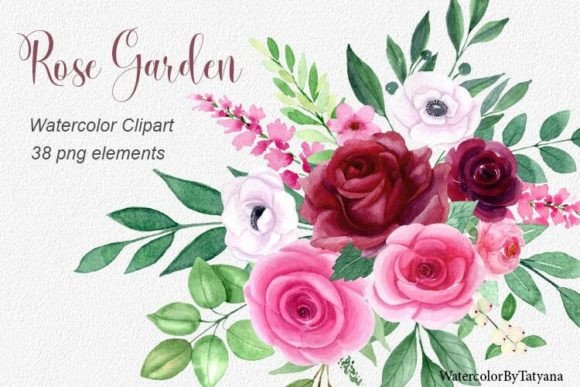
There's a particular quality to hand-painted watercolor that digital tools often struggle to replicate. It’s the subtle bleed of pigment, the happy accidents, the organic texture that feels both delicate and vibrant. This is the exact feeling captured in the Watercolor Elements of Pink Flowers collection. It’s not just a set of digital clipart files; it’s a curated toolkit of artistic assets designed to inject a human, handcrafted touch into a wide array of projects. At its core, this collection features bright, hand-drawn roses in a sophisticated palette of burgundy, pink, and white, complemented by leaves and branches. The style is distinctly modern yet timeless, offering a fresh take on floral design that avoids looking overly stiff or digitally sterile.
The personality of these elements is one of elegant romance and cheerful sophistication. The brushstrokes are visible, giving each petal and leaf a sense of life and movement. This isn't the uniform, predictable look of a standard vector graphic. Instead, the watercolor effect provides a soft, blended appearance with rich color variations and delicate, transparent layers. The overall appeal lies in this authenticity. For designers and creators, this means access to a premium font of visual assets that can instantly elevate a project from feeling purely digital to having a tangible, artistic quality. The collection includes 40 high-resolution PNG files with transparent backgrounds, making them exceptionally versatile for layering and integration into any design.
Where These Floral Elements Truly Shine
The real-world applications for Watercolor Elements of Pink Flowers are extensive, spanning both digital and print mediums. Their strength lies in their ability to serve as a primary visual element or a subtle, supporting accent. In brand identity and logo design, a single, well-placed rose can become the cornerstone of a brand for a boutique, florist, or wellness studio. The hand-drawn nature communicates care, quality, and a personal touch—key attributes for small businesses and entrepreneurs looking to build a memorable brand.
For marketing and publishing, these assets are invaluable. Imagine them gracing the cover of a seasonal magazine, adding a burst of color to a blog post header, or creating an inviting atmosphere in social media graphics. They work beautifully in editorial design as chapter openers or pull-quote decorations. In the realm of packaging design, a cluster of these flowers can transform a simple product label or gift box into something special. For event-based projects, they are a natural fit. Wedding invitations, party flyers, birthday posters, and greeting cards all benefit from the warm, celebratory feel these watercolor florals provide.
Beyond commercial use, they are perfect for personal creative projects. Crafters can use them for scrapbooking, custom stationery, or digital journaling. The high resolution (300 dpi RGB) ensures that even at the stated 5-inch diameter for the main bouquet, the print quality remains sharp and professional. This makes them suitable for everything from small stickers to larger posters and presentation slides.
Integrating Watercolor Florals into Your Design Workflow
Using a creative font like this effectively requires more than just dropping it onto a canvas. It’s about understanding its role in the visual hierarchy. Because these elements are detailed and colorful, they naturally draw the eye. Use them as a focal point in your layout. A single, large rose can anchor a design, while smaller, scattered leaves and buds can create a cohesive frame or border. This technique helps guide the viewer's attention and creates a balanced composition.
One of the most critical considerations is pairing. The organic, flowing style of Watercolor Elements of Pink Flowers pairs exceptionally well with clean, simple typography. A crisp sans serif font like Montserrat or Lato for body text provides excellent readability and creates a pleasing contrast. For headings, a subtle serif font like Playfair Display can add a touch of classic elegance. The key is to let the floral art be the star and use typography as its supporting cast. Avoid pairing these elements with overly ornate or script fonts, as the combination can become visually cluttered and difficult to read.
When evaluating project fit, consider the desired emotional tone. These watercolor florals evoke feelings of joy, romance, and natural beauty. They are ideal for projects related to weddings, beauty, lifestyle, gardening, and celebratory events. For a corporate financial report or a tech startup's main branding, they might feel out of place. However, they could be used sparingly in internal communications or a seasonal marketing campaign to add a human touch.
Making the Most of Your Design Assets
Before committing to any design asset, it’s wise to test its versatility. Download any available previews to see how the elements look at actual size and in context with your existing brand colors and fonts. Check the file formats—in this case, transparent PNGs are the industry standard for easy layering in software like Adobe Photoshop, Illustrator, Canva, or Affinity Designer.
Review the included styles. A good collection offers variety. Here, you have not just isolated flowers but a full bouquet, individual roses, and complementary leaves and branches. This allows for tremendous flexibility in composition. You can create dense, lush arrangements or minimalist, single-stem accents depending on the project's needs.
Finally, always understand the commercial license. For designers and business owners, this is non-negotiable. Ensure the license covers your intended use, whether it's for a client's logo, printed merchandise, or digital products for sale. A clear, permissive license is a hallmark of a professional-grade asset, allowing you to use the Watercolor Elements of Pink Flowers with confidence in both personal and commercial projects, ensuring your creative work is not only beautiful but also legally sound.